
Governor’s Ag & Economic Development Summit Highlights Child Care Crisis
by Marti Beard, Co-President, Early Futures Partnership
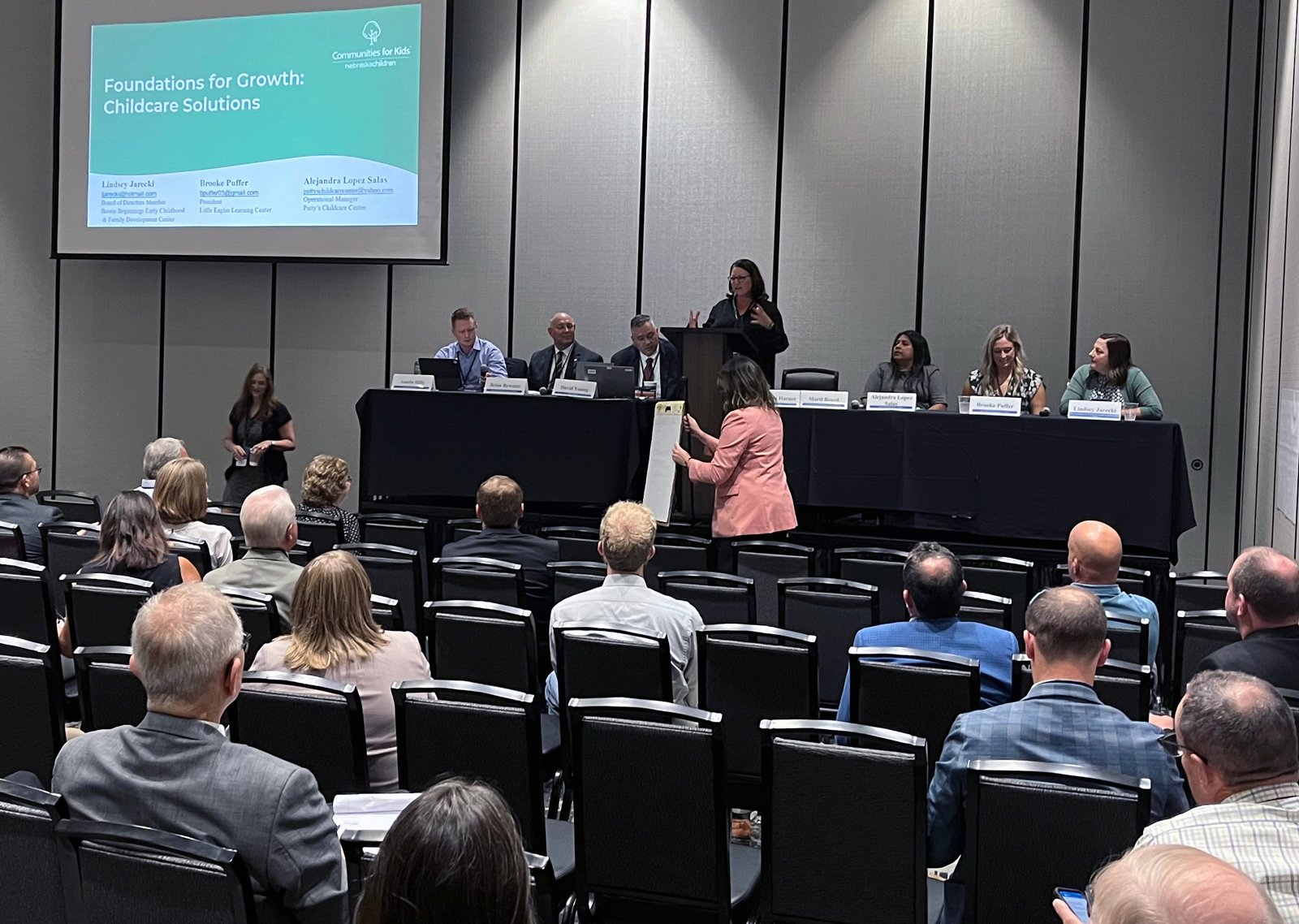
Child care was featured alongside housing in a panel discussion and was the subject of one of four Action Hour conversations at the 2024 Governor’s Ag & Economic Development Summit in Kearney on August 8.
The lack of available child care throughout Nebraska hinders businesses and communities in recruiting the workers they need to grow and thrive. Information distributed by Governor Pillen said, “In economic development, we’re now primarily competing for people, not jobs. It’s critical that we retain our grads and recruit top talent to the state. To do so, we must find creative solutions to make housing more affordable and child care more available.”
Robust Action Hour discussion
The Child Care Action Hour, facilitated by me, Rachel Sissel and the Nebraska Children and Families Foundation’s Communities for Kids team, was 60 minutes of meaningful discussion, idea sharing and consensus building to determine three strategies Nebraska can deploy to move child care forward as a state priority. A robust conversation took place among a wide array of audience members, including:
Nebraska banking and finance
USDA loan specialist
UNL Rural Prosperity Nebraska
South Central Economic Development District
University professors/staff
Economic development directors
Representatives of several rural Nebraska communities
Farm Bureau of Nebraska representatives
This group determined that the overall vison is to achieve “affordable quality early childhood care for all, with long-term sustainability created through partnerships with an emphasis on professionalism.”
Specific areas of discussion included increasing availability of resources for providers and parents, professionalization of the early childhood workforce, helping communities learn and value the importance of early childhood, increased choice in care for families and legislation that supports and funds early childhood programs and supports in communities.
The group determined three strategic directions that would be most beneficial to prioritize:
Investment in early childhood
Allocating a percentage of taxes to private community-based early childhood programs
Legislation that provides public dollars for child care operational costs
Develop key partnerships
Schools
Senior/nursing home care
Businesses
Local economic development
Training and resources for providers and families
Awareness of the importance of early brain development
Local “library” of resources available for providers and families