
Building Community First: PLA Class 8 Kicks Off in Kearney
by Jodi-Renee Girón, FFN Grassroots and Advocacy Advisor
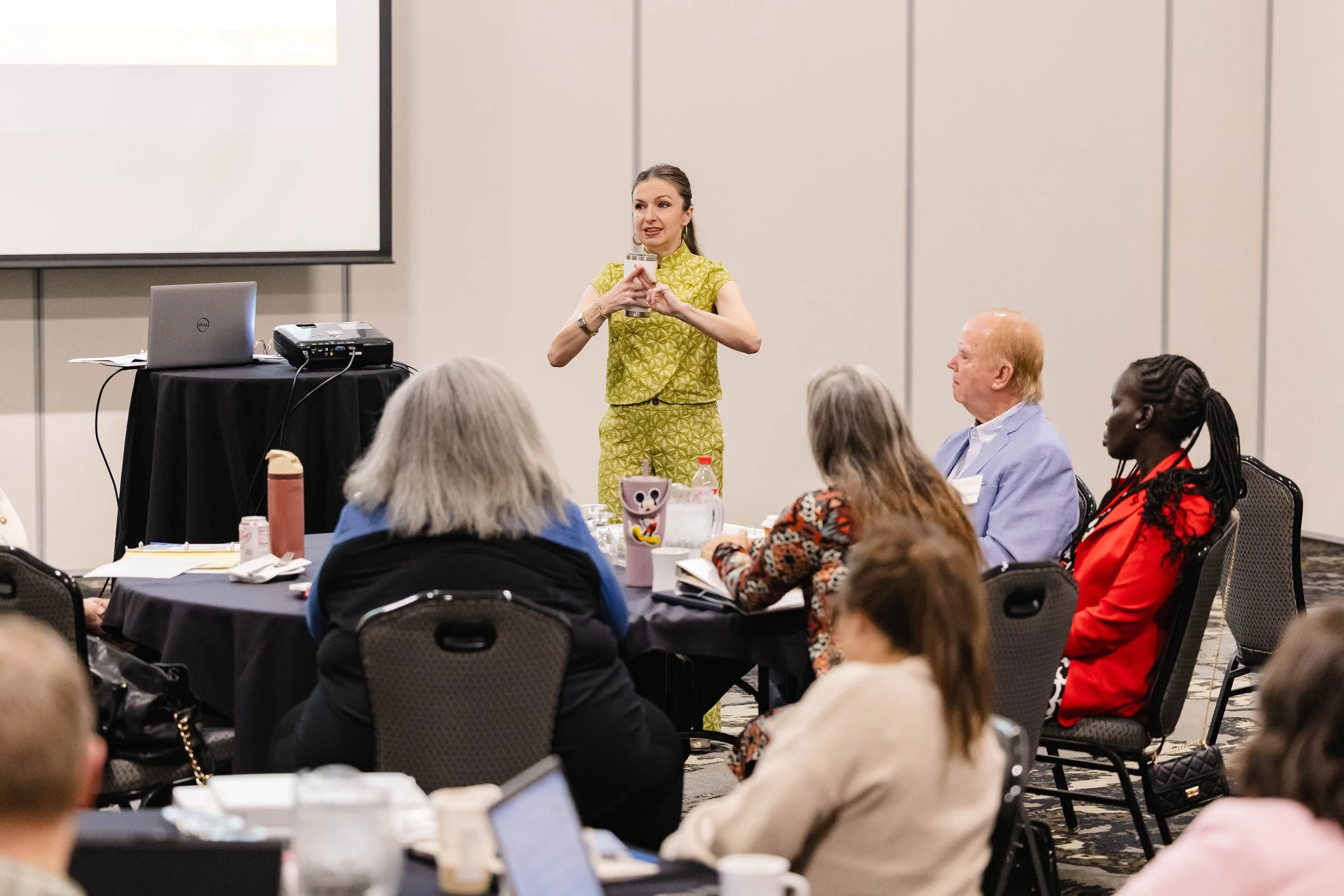
Advocacy is a group project. Without community, we lose sight of what we as a people really need and who we really are. One of the biggest benefits of the Nebraska Early Childhood Policy Leadership Academy is learning from the diversity of voices in the room. Just as valuable is the new community that forms through the program: Advocates who share a desire to develop their skills and grow their personal leadership gifts.
Keynote by former State Senator Annette Dubas
There was no better way to begin our first PLA gathering than hearing from former State Senator Annette Dubas, who delivered the keynote at the welcome dinner. Drawing on her experience as an advocate, an invested community member and a public servant, she shared insights and encouragement with our new advocate leaders. Seeing perseverance modeled up close, and being called upon as necessary agents of change by a respected and remarkable Nebraskan, was a clear inspiration.
Workshop #1 has a two-fold goal: Lay the groundwork for long-term, sustainable advocacy work and build relationships with others who will support you in that work. On Tuesday and Wednesday, October 13 and 14, 20 community leaders from across Nebraska met in Kearney. Most were strangers to one another, but by the end of the workshop, new relationships had taken root. That relational engagement was evident from the start: PLA alum Maddie Gates joined the incoming class at the dinner, then welcomed them into their first workshop the next morning.
Look at past grassroots movements
Since advocacy understanding must be fluid to keep up with changes in culture, it's important to know where it came from. As part of the program, we look at past grassroots movements that prompted significant public policy conversations. Some produced positive policy change. Others are still working toward that elusive win. Each movement had unrecognized leaders, unexpected bumps in the road and humble beginnings that we rarely acknowledge in our historical storytelling.
That reflection led the group into a deeper discussion about what it takes to start even the smallest initiative and build momentum. Central to that conversation was time for each member of the cohort to consider what they bring to the work through their unique skills and life experiences.
Making community stories credible, impactful
Every PLA class for the past six years has heard the mantra repeated: Effective advocacy is strategic, coordinated and credible. Dr. Katie Bass, director of policy research at Early Futures Partnership, facilitated the second half of the day, reinforcing the tools needed to make our community stories both credible and impactful. Through hands-on exercises, each participant learned how to find and use key data that brings clarity to the challenges they're working to address and establishes them as credible voices with decision-makers and other community leaders. Once again, we saw that credibility creates trust, and trust sets advocacy up for even stronger story impact.
This year's class includes entrepreneurs, mental health experts, child care providers and trainers, economic developers, nonprofit leaders, community organizers and people doing hands-on work in their communities. That mix of perspectives and expertise sparked robust discussion, and it's exactly what it takes to uncover creative solutions to community challenges.
The next PLA workshop will be in November. We'll build on the work from this month's session and explore ways to nurture the relationships that drive change at the local level.
To learn more about the Policy Leadership Academy, visit our web page at www.earlyfutures.org/pla-ffn.