
Big Fish, Small Bowl: The Child Care Solutions You Won't Find Working Alone
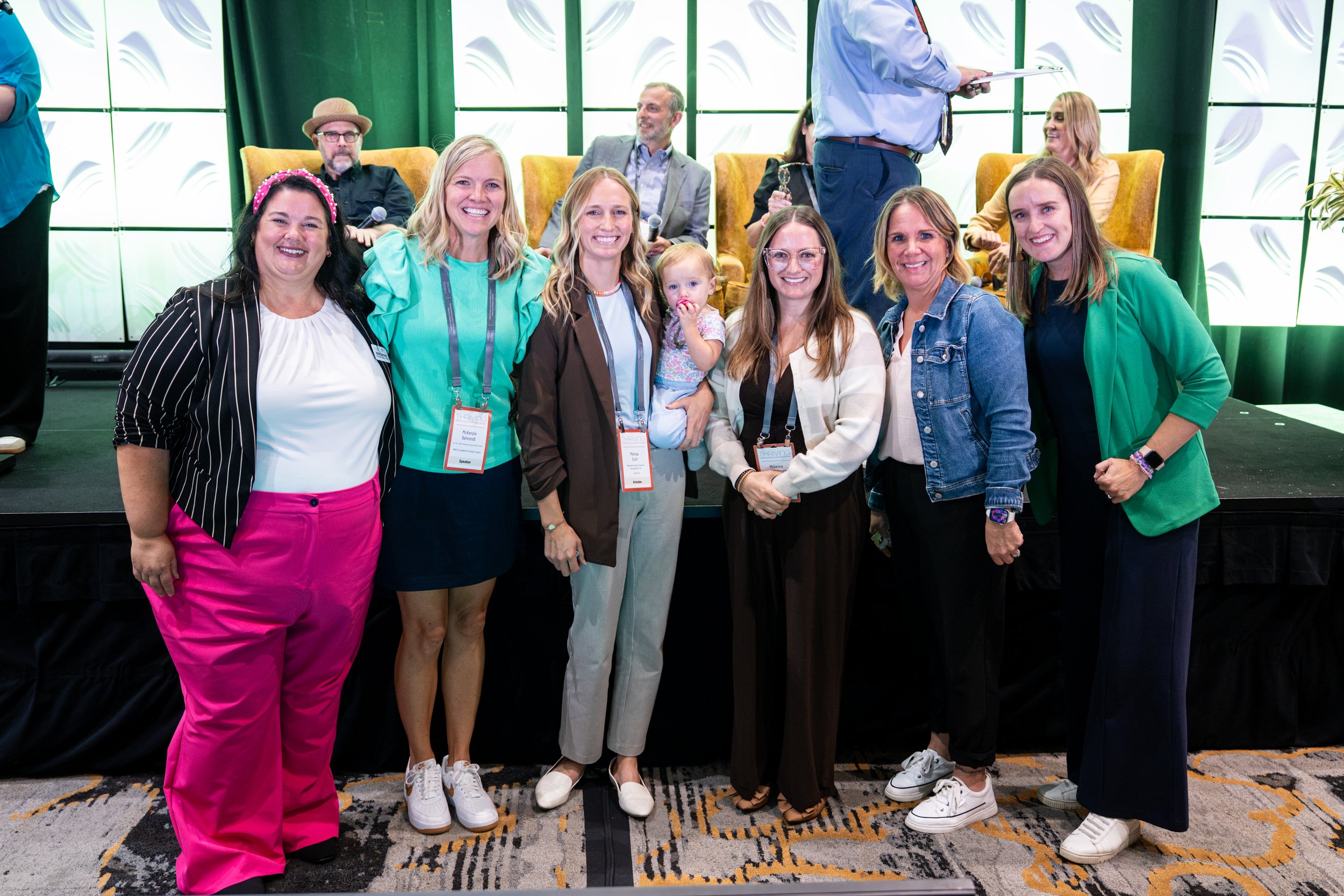
“Fish Bowl” winners Wendy Gwennap (Adams County), McKenzie Behrendt (Ravenna Area), Melissa Dush (Sherman County), McKenna Fahrenbruch (Holdrege Area), Mandy Eastman (Giltner), and Amanda Polacek (Kearney)
What happens when you put people from different communities in a room and challenge them to solve a child care problem? At this year's C4K Convening, we found out. During a Shark Tank-style activity called the Fish Bowl, mixed-community teams pitched innovative solutions to real challenges facing child care. The competition was fierce, but the “Design Divas” team emerged victorious with an idea that really impressed the judges.
Set the scene for us: What child care challenge was your team trying to solve?
Wendy: Our team wanted to focus on increasing child care capacity in a way that provides long-term support for providers and promotes sustainability in our smaller communities. Rural centers often face staffing challenges based on the number and ages of children they serve, so we wanted to create a solution that meets the needs of communities with 20 to 40 children. We also wanted to focus on sustainability by supporting happy, healthy caregivers over the long-term and developing a model that could be replicated in communities across the state.
What was your team’s winning idea?
McKenna: Our winning idea was to design a guidebook that walks communities through building a cluster of three or four in-home child care buildings that, together, can fill the same capacity a child care center would, without the cost of building a full center. This approach is more cost-effective for small communities and requires fewer resources, including less staffing and lower overhead, which makes it easier to sustain long-term. Like all of our other C4K ideas, we wanted this resource to be something other communities can replicate and share!
Why do you think your pitch stood out?
Amanda: Everyone loves a guidebook! It's a great option to help communities get a working model up and running quickly, when timing is right.
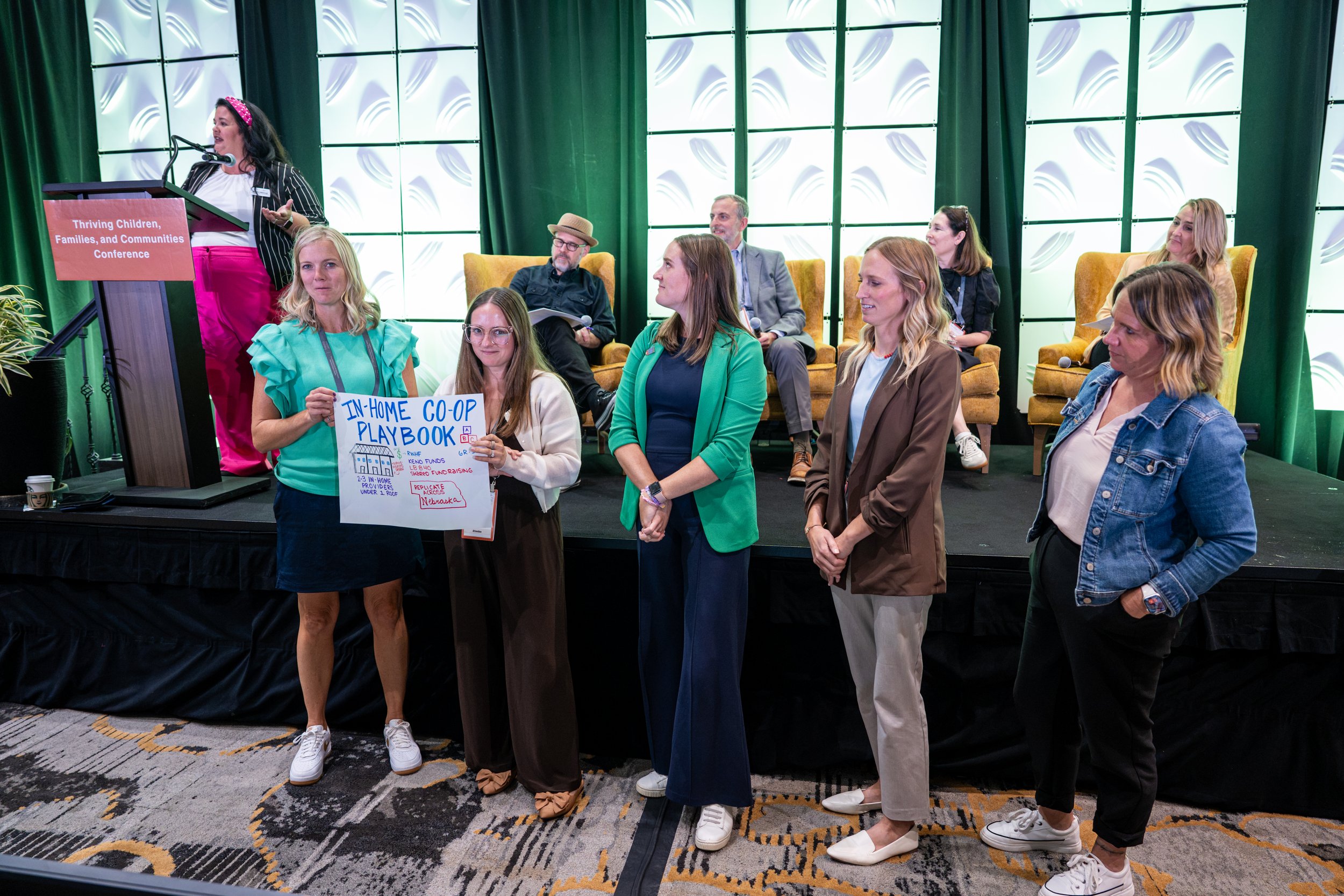
The “Design Divas” run through the major points of their plan
How did working with people from other communities influence your thinking?
Melissa: As the director of our county’s economic development program, I often view child care through the lens of workforce participation, business growth, and attracting and retaining families. Convening with people from other parts of the state, with different backgrounds and roles always broadens my perspective and reminds me how deeply child care impacts every aspect of our communities and the families that call Nebraska home. Hearing fellow C4K community experiences reinforced that availability, quality, and affordability are shared challenges across Nebraska, even though solutions may look different in each community. Coming together to brainstorm, troubleshoot, and connect helped me consider new approaches and reminded me that we do not have to navigate these challenges alone. These relationships create opportunities to learn from one another and strengthen child care across our communities.
Beyond the competition, what stood out to you most about the Convening?
McKenzie: Many times, adults don't have the freedom and encouragement to imagine, this Convening event invited imagination to go wild, and it was fun to hear all of the ideas when there aren’t barriers blocking our dreams. Connections were made to help create relationships that can extend beyond Convening day.
Did you leave with a new idea, connection, or perspective that you brought back to your community? If so, what was it?
Mandy: Yes! I left with a renewed perspective on what’s possible when a community comes together around child care. Hearing ideas from other communities encouraged me to think beyond our immediate needs at Little Stingers, and I came home with new ways to connect with local businesses and community partners.
Finish this sentence: “You should come to next year’s C4K Convening if you want to…”
Wendy: …connect with the best of the best in the early childhood industry. You never know what could happen when brilliant minds come together to build real solutions!
McKenna: …collaborate and connect with other communities and hear what is working and maybe what's not working and learn from them. It's the best way to connect and get ideas!
Amanda: …feel supported and encouraged by peers in the trenches in this work.
Melissa: …be part of the lasting change and impact that we are seeing in communities across the state through the Communities for Kids Initiative!
McKenzie: …be energized by creative minds, be supported in vital volunteer work, and be connected to others who can help you reach goals.
Mandy: …find an accountability partner - I found one! We plan to connect monthly to encourage each other, follow through on our goals, and keep the momentum going. I brought that energy back to Giltner with a stronger belief that even a small rural community can make a big impact—and we don’t have to figure it all out alone.